



Insight
Ports at the Centre of the Energy Transition: Why the UK Must Act Now
David Mitchell is a senior leader at UK Power Networks Services, focused on enabling the UK’s energy transition through the design and delivery of resilient, integrated power systems for industry, infrastructure and emerging energy hubs.
The role of ports is being fundamentally redefined.
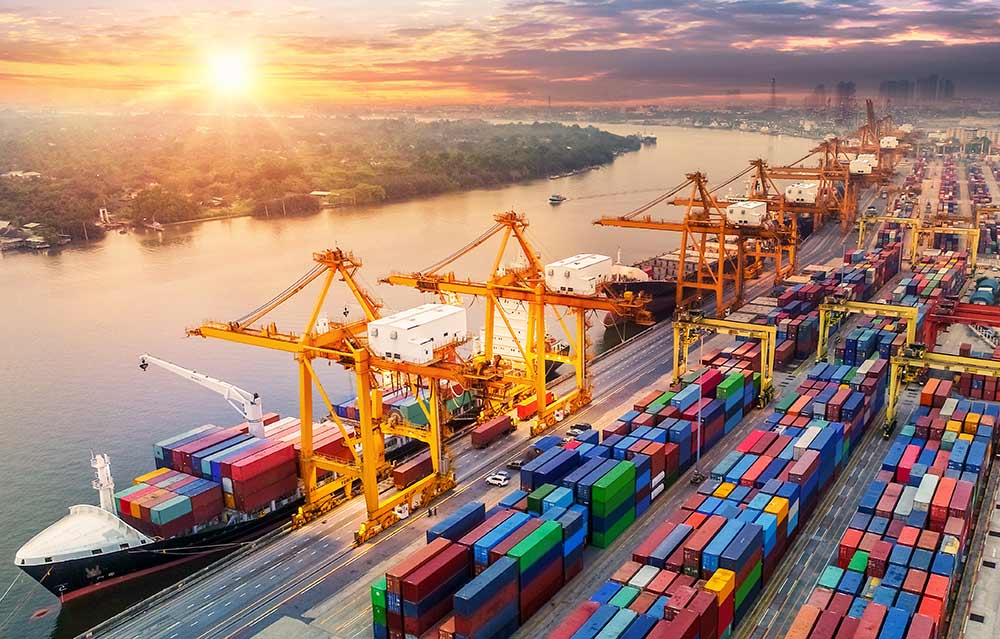
For decades, ports have been viewed as gateways for trade – handling goods, enabling logistics and supporting economic growth. Today, that perspective is rapidly shifting. Around the world, ports are emerging as critical energy infrastructure, sitting at the intersection of power systems, fuel supply chains and industrial decarbonisation.
This is not a marginal change. It is a structural one – and for the UK, I believe it represents both a major opportunity and a growing delivery challenge.
From electrification to energy systems
The first phase of transformation is already underway. Electrification of port operations – from cranes and vehicles to shore power for vessels – is accelerating, driven by regulation and the need to reduce emissions and improve air quality. Electrification is no longer aspirational; it is quickly becoming a baseline requirement for competitive ports.
But electrification is only the starting point.
As ports transition away from diesel, they are becoming large, complex energy users with highly variable demand profiles. This fundamentally changes the nature of the infrastructure required. Ports now need access to high-capacity power, supported by resilient networks, energy storage and smart systems capable of managing fluctuating loads.
In the UK, this is where reality is beginning to diverge from ambition.
Grid capacity and connection times are increasingly recognised as significant barriers to port decarbonisation alongside broader challenges relating to funding, commercial viability, planning and technology development. Without timely investment in both transmission and distribution infrastructure, ports simply cannot electrify at the pace required.
The affordability challenge
While grid capacity is often presented as the primary barrier to port electrification, affordability is increasingly emerging as an equally significant challenge.
While the wider environmental and air quality benefits of shore power are well established, commercial viability remains a key consideration for port operators and shipping lines. For many operators, the cost of electricity, connection charges and wider commercial considerations can be just as important as access to capacity itself. Ports are increasingly asking not only, "Can we get power?" but "Can we make power affordable?"
In my view, affordability should not be seen simply as a challenge of high costs, but as a challenge of identifying the right solution. We will always explore a range of infrastructure, connection and energy options to help clients balance operational requirements, resilience and investment priorities. This may include phasing demand growth, integrating energy storage, developing private networks or adopting smarter energy management strategies to improve overall project economics. The objective is not simply to connect more power, but to find the most effective and commercially viable pathway to decarbonisation.
The rise of the port as an energy hub
Beyond electrification, a more profound shift is taking place. Ports are evolving into multi-energy hubs, supporting not just electricity, but a mix of fuels and energy vectors.
While electrification will play a critical role, no single fuel pathway is likely to meet the needs of every vessel type or operation. Short-sea shipping and ferries are expected to electrify first, while deep-sea shipping may increasingly rely on hydrogen-derived fuels, ammonia, methanol and other alternative energy carriers. As a result, ports must plan for flexibility and accommodate multiple energy pathways over time.
Ports will play a decisive role in making these fuels viable – providing the infrastructure to import, store, process and bunker them at scale.
At the same time, the concept of the port as an energy hub is broadening significantly. Many ports are exploring on-site renewable generation, battery storage, microgrids, electric vehicle charging infrastructure, energy trading and flexibility services. Some are even assessing vessel-to-grid technologies and opportunities to share energy infrastructure with surrounding communities.
This convergence of technologies is transforming ports from energy consumers into active participants in the energy system – balancing supply and demand, integrating multiple fuels and supporting wider industrial decarbonisation.
For the UK, this aligns closely with the development of industrial clusters in regions such as the Humber, Teesside and the Thames. These areas are expected to play a central role in hydrogen production and carbon capture, with ports acting as the interface between domestic industry and global energy markets.
Infrastructure is now the critical path
The technologies needed to enable this transition largely exist. The real constraint is infrastructure.
Delivering the next generation of ports requires a step change in how energy systems are designed and delivered. It is no longer sufficient to treat grid connections, on-site generation and operational electrification as separate projects.
Leading ports are increasingly recognising the need for long-term energy master planning. Demand growth forecasts extending beyond 100MW, assessments of private wire networks and consideration of dedicated transmission infrastructure are becoming increasingly common. The direction of travel is clear: ports require whole-system planning rather than project-by-project electrification.
Instead, ports need integrated energy solutions that combine high-capacity grid connections, private networks and microgrids, renewable generation and storage, and flexible systems capable of supporting both electrical and fuel-based energy.
From connection to integration
Meeting this challenge demands a shift in mindset – from connecting assets to integrating systems.
At UK Power Networks Services, we are seeing first-hand how ports and industrial clients are grappling with this complexity. In my experience, the requirement is no longer simply for more power, but for smarter, more resilient and more flexible energy infrastructure that can adapt alongside changing operational demands.
This includes designing and delivering high-voltage connections capable of supporting future growth; developing private wire networks to improve resilience and reduce dependency on constrained grids; integrating energy storage and smart controls to manage demand peaks; and supporting the integration of emerging fuels such as hydrogen alongside electrified systems.
Battery energy storage is emerging as one of the key enabling technologies in this transition. Beyond providing resilience, batteries can help reduce peak demand, optimise energy costs, integrate renewable generation and support port microgrids. Increasingly, storage is being viewed not as a standalone asset but as part of a wider, integrated energy strategy that combines flexibility, resilience and commercial optimisation.
Crucially, this approach also requires aligning infrastructure delivery with operational needs – ensuring that energy systems support, rather than constrain, port productivity and growth.
A strategic opportunity for the UK
The UK can benefit from opportunities in this space. However, delivering this transition will require close collaboration between port operators, shipping lines, network operators, regulators, government and technology providers. No single business can deliver the required infrastructure and operational changes in isolation.
Our ports are closely connected to offshore wind developments, industrial clusters and international trade routes. The emergence of Freeports adds further potential – creating opportunities to develop integrated energy ecosystems that combine industry, logistics and low-carbon energy within a single location.
At a regional level, the North Sea is becoming a focal point for collaboration, with the development of green shipping corridors and shared fuel infrastructure linking UK ports with counterparts in Europe.
But leadership is not guaranteed.
Other countries are moving quickly to invest in the infrastructure needed to support alternative fuels and large-scale electrification. Without a coordinated approach to energy infrastructure – particularly grid capacity and the commercial frameworks that underpin investment – the UK risks falling behind.
From ambition to delivery
Ports now sit at the centre of three national priorities: decarbonisation, energy security and economic growth.
They are no longer simply enablers of trade. They are becoming integrated energy hubs that will help shape the UK's future energy landscape.
The opportunity is significant, but success will depend on more than technology alone. It will require coordinated planning, commercially viable business models, strategic investment in energy infrastructure and a whole-system approach that brings together electricity networks, renewable generation, storage, flexibility services and emerging fuels.
Above all, it will require a recognition that the transition of ports is not just about deploying new technologies. It is about building the integrated energy systems that allow those technologies to operate effectively, economically and at scale.
The ports that succeed in this transition will not only move goods more efficiently or reduce emissions. They will become central nodes in a smarter, more resilient and more flexible energy system – helping to power the UK's net-zero future.
Share this article


