



Insight
Powering the Transition - Why critical infrastructure needs an energy strategy, not just a grid connection
The UK’s critical infrastructure is undergoing one of the most significant transitions in its history.
Airports are electrifying ground operations, rail operators are investing in digital and predictive technologies, ports are preparing for shore power and electrified logistics, and water companies are modernising assets to reduce leakages, and improve efficiency, defence is improving resilience, and data centres are investing in sustainable, low-cost energy sources.
The transition relies on the ability to integrate new and innovative technologies within existing energy systems and infrastructure. Sustainability commitments can struggle to move from concept to delivery without sufficient electrical capacity, network design, control systems, operational resilience and long-term investment strategy.
The transition is already here
Across the UK, investment decisions made today will shape the resilience of operations for decades. Electricity demand is rising as fleets, heating, industrial processes and equipment are electrified. At the same time, grid capacity at the transmission level is constrained, connection times for major construction sites can be lengthy, and operational requirements leave little room for disruption. The result is a change in how energy needs to be planned, shifting from a utility cost to a core part of asset and investment strategy.
Government policy is also moving in the same direction. The UK’s modern industrial strategy and clean energy sector plan place clean energy, grid investment, electrification and industrial decarbonisation at the heart of long-term economic growth. For critical infrastructure operators, the commercial question is becoming more important than the sustainability ambition alone. Where will demand grow? What capacity will it require? Can it be used to support flexibility? And what infrastructure must be in place before the asset is ready to operate?
Different sectors, a common challenge
Each sector faces its own transition challenges. Airports must balance passenger growth, safety-critical operations and decarbonisation, while preparing for higher electricity demand from ground support equipment, fleet charging and future fuels. Rail operators are using digital systems, automation and predictive maintenance to improve performance, but these technologies depend on resilient power and communications infrastructure. Ports are looking at shore power, electric cargo handling, logistics electrification and new energy vectors, yet many face significant constraints in available electrical capacity. Water companies must reduce leakages, while reducing emissions, improving asset resilience and service reliability across complex, distributed estates. Data centres, now recognised as critical national infrastructure, are experiencing unprecedented growth as AI and cloud computing drive demand for secure, reliable and sustainable power. Defence organisations are also evolving, embedding sustainability and energy security into estate modernisation programmes to enhance resilience, support operational readiness and reduce long-term environmental impact. What unites these sectors is a growing dependence on reliable, flexible and future-ready energy infrastructure.
The answer starts with a whole-system view. Operators need to understand their current network capacity, load profiles and asset condition, then model how demand could change as projects are delivered. This creates a basis for deciding where to reinforce, where to generate or store locally, and where flexibility can reduce peak demand. The objective is not to predict the future perfectly. It is to build an agile energy system that can adapt as the future changes.
What electrification means in practice
Aviation - decarbonising airport operations and preparing for new fuels
In aviation, sustainability activity is focused on reducing emissions from both flight and airport operations. While sustainable aviation fuel, hydrogen and zero-emission aircraft will shape the long-term pathway, airports can act now by electrifying ground support equipment, transitioning airside and landside fleets, improving building efficiency, installing renewable generation, and reducing emissions from terminals, baggage systems and support facilities. The UK’s ambition for Net Zero airport operations by 2040 reinforces the need for airports to plan for significantly higher electricity demand, resilient private networks and future fuel infrastructure.
Ports - enabling shore power, cleaner vessels and electrified logistics
Ports are becoming central to maritime decarbonisation. Shore power is a major opportunity, which allows vessels to switch off auxiliary engines while at berth and connect to land-side electricity supplies, reducing local air pollution and emissions. Alongside this, ports are exploring electric cargo handling equipment, charging infrastructure for port vehicles and logistics fleets, renewable generation, storage, and readiness for alternative fuels such as hydrogen, methanol and ammonia. These changes are associated with substantial new demand, often in locations where grid capacity is constrained, making long-term power planning essential.
Rail - electrification beyond the traction system
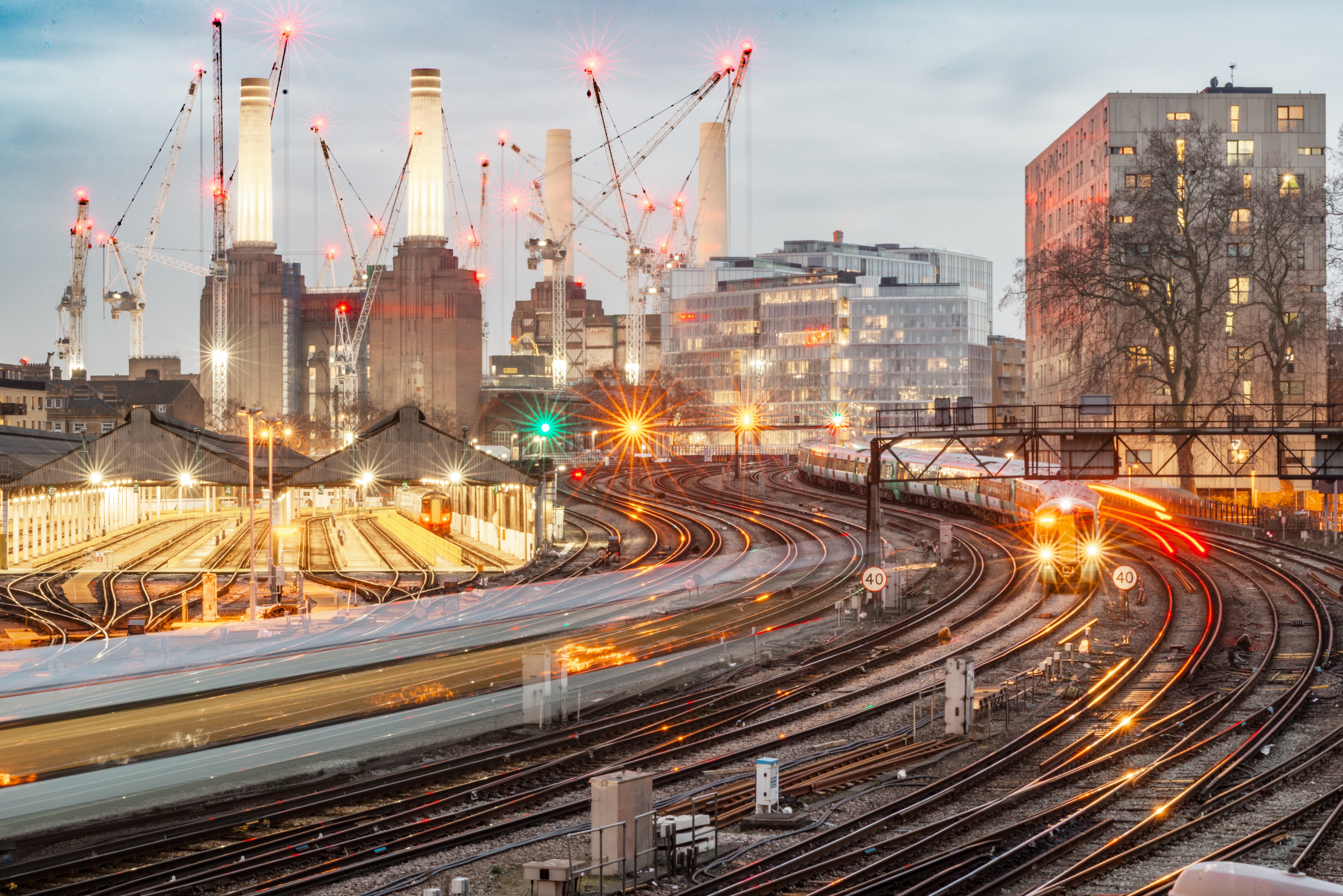
Rail is already one of the lower-carbon transport modes, but the sector still faces a significant transition. Sustainability priorities include reducing reliance on diesel traction, expanding electrification where viable, using battery and hydrogen solutions on harder-to-electrify routes, improving energy efficiency across stations and depots (including options of supplying them from renewables directly), and encouraging modal shift from road to rail. Digital signalling, automation and predictive maintenance can also improve reliability, asset utilisation and operational efficiency. As rail becomes more electrified and more data-driven, resilient power infrastructure and integrated energy planning will be increasingly important.
Water - cutting operational emissions while strengthening resilience
Water companies are pursuing sustainability on several fronts: reducing operational emissions, improving energy efficiency across pumping and treatment processes, generating renewable power from their estates, recovering energy from sludge and wastewater, reducing leakage, improving monitoring, and investing in more resilient assets. Wastewater treatment also presents specific decarbonisation challenges because biological processes can release methane and nitrous oxide. As the sector responds to climate change, population growth, regulatory scrutiny and pressure to improve environmental performance, energy strategy will be critical to balancing decarbonisation, resilience, affordability and service reliability.
Defence - strengthening resilience through sustainable infrastructure
For the defence sector, sustainability is increasingly being viewed through the lens of operational resilience, energy security and long-term capability. Defence organisations are modernising estate infrastructure, improving energy efficiency, deploying low-carbon technologies, electrifying vehicle fleets where appropriate, and exploring how emerging energy technologies can support future operations. At the same time, the sector must maintain reliability across some of the UK's most critical and security-sensitive sites. Energy infrastructure therefore has a dual role: reducing carbon emissions while enhancing resilience against future operational, environmental and security challenges. As defence estates evolve, sustainability and infrastructure investment are becoming closely linked, helping to create assets that are more secure, adaptable and future-ready.
Data Centres - powering the digital economy sustainably
Data centres have become a critical part of national infrastructure, underpinning everything from cloud services and financial systems to artificial intelligence and digital public services. As demand for AI and high-performance computing accelerates, operators are facing growing pressure to secure power, improve energy efficiency and meet increasingly ambitious sustainability targets. Sustainability efforts are focused on renewable energy procurement, low-carbon power supplies, advanced cooling technologies, energy efficiency improvements and opportunities to provide flexibility services to the wider electricity system. However, the sector's biggest challenge is often access to reliable electrical capacity. As computing demand continues to grow, resilient and sustainable energy infrastructure will be essential to supporting the UK's digital economy and AI ambitions.
From ambition to an investable plan
The tough questions now sit between strategy and delivery. Which assets should be electrified first? What will the peak demand be when projects operate at the same time? Where is existing capacity sufficient, and where is reinforcement unavoidable? Could generation, storage or managed charging reduce the requirement? How should investment be phased so that today’s solution does not constrain tomorrow’s technology? And how can work be delivered without putting safety or operational continuity at risk? Successful transition programmes combine technical analysis, commercial modelling, stakeholder engagement, regulatory understanding and delivery experience. They require decisions that are grounded in data but also shaped by operational reality. A technically elegant solution will fail if it cannot be delivered safely, funded sensibly, maintained effectively or integrated into day-to-day operations.
The value of an infrastructure partner
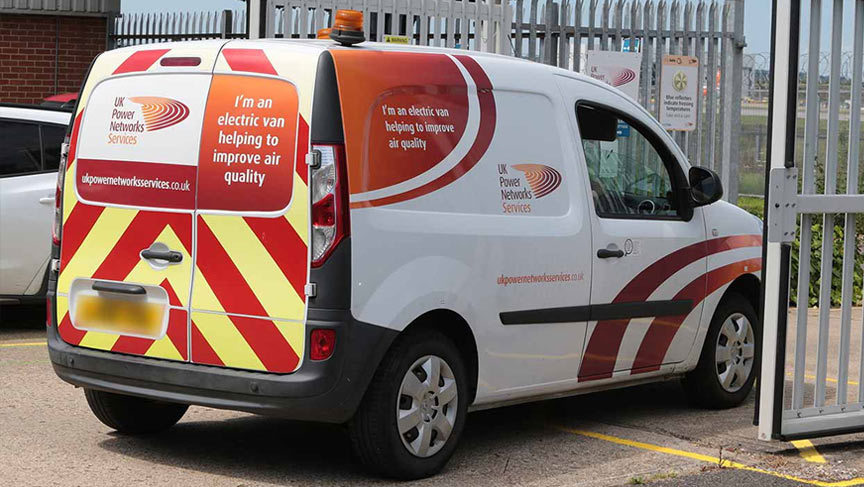
This is where an experienced infrastructure partner is critical. UK Power Networks Services works with organisations operating complex, high-value and often safety-critical infrastructure to help them plan, deliver, operate and maintain the energy systems that underpin their transition. The value lies in bringing together strategic insight and practical delivery capability: understanding future demand, assessing network constraints, integrating innovative technologies, and ensuring that infrastructure decisions support long-term organisational objectives.
For aviation, rail, ports, water, defence, universities, data centres and other energy-intensive environments, electrification is an operational investment as much as a sustainability one. The right energy strategy can help organisations use existing assets more effectively, reduce avoidable capital spend, manage peak demand, improve resilience and create capacity for future technologies. The goal is not simply to connect more load. It is to build an energy system that enables the business to change.
Four actions for you to start now
1) Baseline:
Create a clear baseline of their current energy position, including asset condition, capacity, demand profiles, emissions, costs and operational constraints.
2) Model:
Model future scenarios rather than relying on a single forecast, recognising that technology uptake, regulation, customer behaviour and commercial priorities will continue to evolve. Optimisation modelling can be used to identify the mix of LCTs (batteries, solar, wind, etc) that offers the lowest cost solution, whilst ensuring sustainability targets are met.
3) Easy-wins:
Identify no-regret actions that can be delivered now while keeping longer-term pathways open.
4) Integrate:
For more significant changes, they should engage early with the right partners, to determine lead times for grid connection, design, procurement, and construction. And conduct integration planning with existing technologies and operations to construct a realistic implementation timeline.
The advantage of acting early is not simply securing capacity. It is creating options. Early planning gives organisations more time to evaluate alternatives, phase investment, manage connection risk and avoid expensive rework. Waiting can turn an infrastructure constraint into a programme constraint.
Powering the transition
Powering the transition to low carbon technologies, is built on a simple premise. Electrification will only move at the pace that infrastructure can support it. Organisations that treat energy as a strategic asset can make better decisions about where to invest, when to invest and how to keep options open. Energy transition can offer a competitive advantage for an organisation and serve as a cornerstone of economic change. UK Power Networks Services helps clients make that shift: from commitments to delivery, from individual projects to long-term strategy, and from today’s constraints to tomorrow’s opportunities.
Share this article


