




Insight
Twenty Years working to support the Defence Estate: Why Power Resilience Is Now a Capability Multiplier
In defence, “resilience” is often spoken about in terms of dependable platforms, supply chains and operational readiness. Yet one enabling system sits beneath almost every modern capability: electrical infrastructure.
From secure communications and mission planning to accommodation, training, dockyards and increasingly electrified facilities, equipment and hardware, the defence estate depends on power that is not only reliable - but robust under today’s additional layer of uncertainty.
That’s why, as UK Power Networks Services marks 20 years of supporting Defence networks, the milestone feels less like an anniversary and more like a marker of how far estate resilience has moved up the strategic agenda. Since 2006, our role has evolved from reinforcing and renewing legacy networks into a mature infrastructure programme focused on modernisation, security and long-term high performance across complex, high-security environments.
And the direction of travel is clear: defence sites are becoming more electrified, more digitally enabled and more interdependent - which makes resilient estate power systems a genuine capability multiplier, not a background utility.
From ‘keeping the lights on’ to enabling operational advantage
Two decades ago, the estate challenge was often framed as asset condition and reliability: ageing networks, constrained capacity and maintaining continuity on complex sites. Today, those fundamentals still matter - but the “why” has expanded.
Defence bases are critical points in national infrastructure. They host the people, equipment and systems that sustain readiness, including for a host of other organisations - and they are expected to withstand disruption, respond quickly and continue operating under pressure. The defence estate also faces a more complex risk picture: physical threats, cyber risk, climate-driven disruption, and the operational consequences of disturbances to the electricity grid.
As our Defence sector experience shows, resilience is not a single intervention; it is an end-to-end discipline: engineering design, secure operations, planned maintenance, rapid fault response and long-term investment planning. Over 20 years we have modernised and upgraded electrical networks across many high-security sites, supporting new-build programmes and ensuring our energy systems meet the highest Defence standards - while building resilience for evolving demands and emerging threats.
Our work over two decades has enabled critical Defence operations to remain resilient and reliable, and we are proud to continue supporting the estate as it evolves to meet the challenges of the future
The electrification of the estate is accelerating - so the resilience requirement changes
The defence estate is changing in ways that have direct implications for engineering choices.
First, there is more demand: more on-board systems, more sensors, more digital infrastructure, and greater reliance on electricity for day-to-day operations. Second, there is new load complexity: electrified fleets, heat pumps, renewable generation and increasing requirements for flexible, high-quality power. Third, there is estate transformation: Defence is modernising accommodation and consolidating parts of the estate, creating new loads, data centres and energy requirements that can’t be solved by “like-for-like” asset replacement.
The MOD context is visible on the ground: Defence sites are supporting major accommodation programmes and estate upgrades, with significant pressure placed on existing infrastructure as estates are enlarged, consolidated and modernised. The electrification of vehicles and fleets on military sites is exciting, yet it adds further demand on available energy capacity - at the same time as Defence seeks to reduce reliance on fossil fuels and engage suppliers on sustainability.
For engineers, that means resilience can’t be designed as an afterthought. It must be built into the design from the outset: capacity planning, redundancy philosophy, fault levels, protection coordination, power quality, control systems, cyber considerations, and maintainability all become part of a single resilience design problem.
What “estate resilience” means in practice
When we talk about estate resilience with Defence clients, we usually mean five practical outcomes:
1) Assured supply for critical operations
Resilient systems protect mission-critical loads and help ensure continuity during faults, maintenance or external grid disturbances. On complex defence sites, that often means segmenting and prioritising loads, designing robust switching strategies, and ensuring operational staff have visibility and control.
2) Capacity headroom without unnecessary reinforcement
Defence budgets are under constant pressure, so the engineering challenge is to create capability and resilience without defaulting to expensive reinforcement of electricity grids. This is where optimisation of existing assets, careful load forecasting, targeted upgrades and smart operational strategies can defer major spend while improving resilience.
3) Network modernisation in high-security environments
Upgrading legacy assets on live defence sites is rarely straightforward. Access constraints, security requirements, operational sensitivity and stakeholder complexity all shape delivery. Over the last 20 years we have built experience delivering upgrades and modernisation programmes in precisely these conditions.
4) Resilience that supports sustainability - without compromising capability
Sustainability and resilience are increasingly linked. Defence is looking to improve energy security and resilience while reducing its use of fossil fuels and integrating lower-carbon technologies where they enhance operational effectiveness and help reduce OPEX.
5) A lifecycle approach: design, build, operate, maintain
Resilience is sustained over decades through asset management maturity, planned maintenance, spares strategy, condition monitoring and competent operational response. That lifecycle perspective has been central to how our Defence role has matured over the last 20 years.
Microgrids, storage and “islanding”: moving from backup to autonomy
One of the most significant shifts in critical infrastructure engineering is the move from conventional backup models to hybrid, modular electricity systems—including battery storage, microgrids and on-site generation - designed to maintain operations through disruption, reduced costs and dependence on single points of failure.
This is increasingly relevant to Defence sites because robust and resilient energy networks are a key part of Defence critical infrastructure and need protection in an uncertain world faced with multiple external threats.
UK Power Networks Services’ defence proposition is built on experience and reflects this direction: we integrate technologies such as battery storage and microgrids alongside more traditional network reinforcement and modernisation - helping clients improve resilience, manage capacity constraints and strengthen energy security.
Crucially, this is not “technology for technology’s sake”. For engineers working on Defence estates, the value comes down to design intent:
Ride-through capability for transient disturbances
Improved restoration through intelligent switching and defined resilience modes
Operational flexibility as loads and mission requirements change
Reduced exposure to fuel logistics where appropriate (without removing proven systems)
Case context: Estate resilience at scale
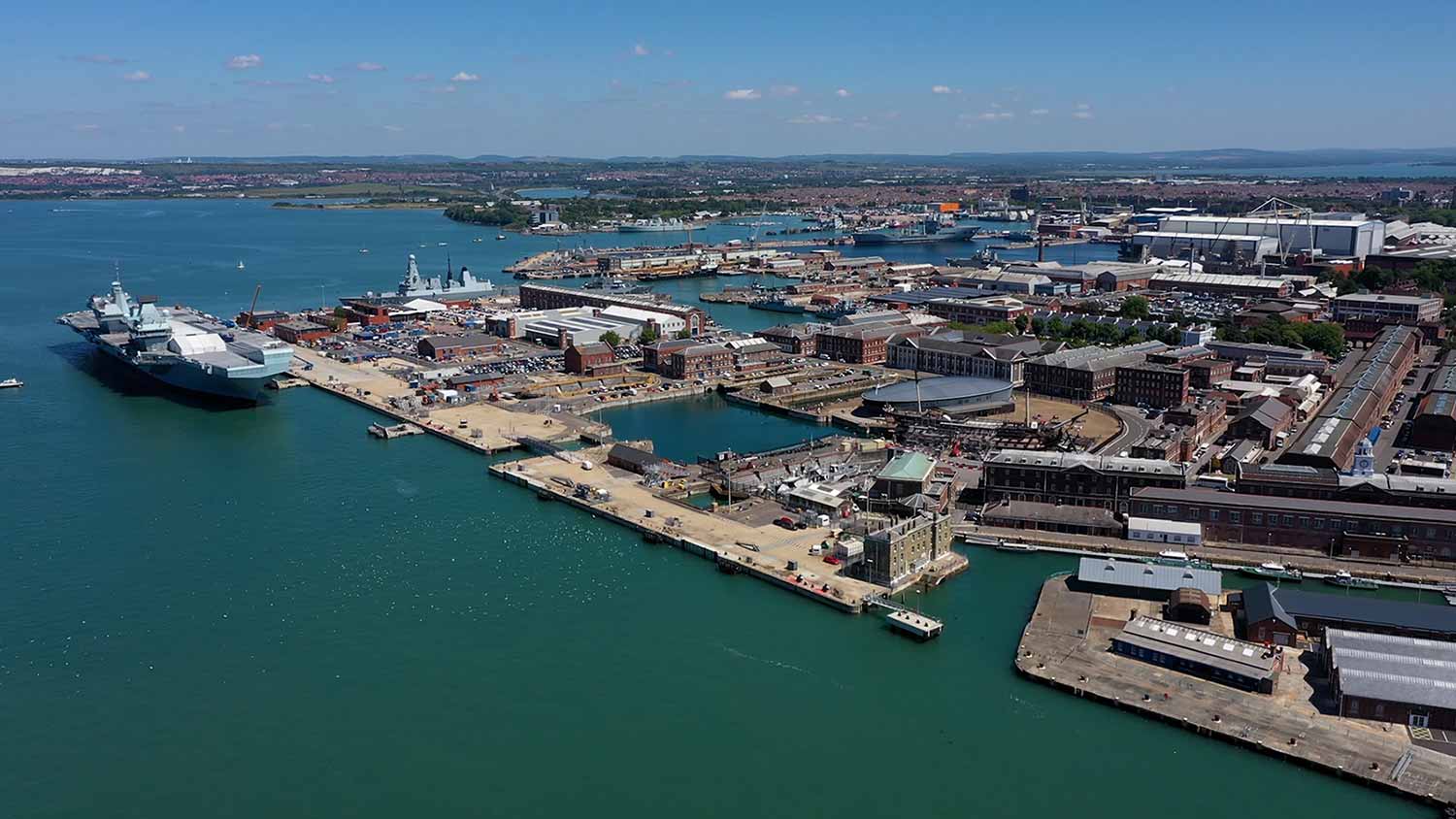
Our Defence work spans a wide geographic and operational footprint - from Portsmouth Naval Base, across Salisbury Plain, and reaching as far as the Outer Hebrides - supporting infrastructure resilience and operational readiness across major establishments.
As highlighted on our website, we operate power infrastructure across large and complex sites for a third of the British Army. We have also delivered high-voltage network upgrades to improve resilience and sustainability at the MOD naval base in Portsmouth. Working within a listed building and a live operational environment, we designed and installed a new substation, including switchboards and a transformer, using a low-impact approach to protect the heritage site, alongside integrating a separate substation to connect on-site solar generation of up to 750kW. This has strengthened a critical element of national infrastructure, enhancing energy resilience while supporting the MOD’s Net Zero ambitions.
These are not abstract challenges; they are practical engineering programmes delivered in operating environments where failure is not an option.
Engineering the next 20 years: a resilience agenda for the defence estate
Looking ahead, defence estate resilience will increasingly depend on three engineering priorities:
1) Designing for change
Electrified fleets, evolving accommodation needs, digital systems growth and new technologies mean demand profiles will shift faster than traditional asset cycles. Resilience design must assume change and remain adaptable.
2) Integrating secure digital control with physical robustness
Visibility, monitoring and control are critical to fast restoration and safe operation - but they must be delivered with security and integrity suited to defence environments.
3) Long-term value: optimising assets and planning investment
Value for money is achieved not only through capital programmes, but through how assets are utilised, maintained and refreshed. Defence clients increasingly want strategies that optimise existing infrastructure, defer unnecessary reinforcement and integrate new energy technologies where they deliver resilience and operational benefit.
Resilience is an engineering discipline - and a strategic one
After 20 years supporting Defence networks, one thing is consistent: when you treat electrical infrastructure as a strategic asset, you don’t just reduce outages - you unlock readiness, assurance and flexibility across the estate.
The message is simple. Defence estate resilience is no longer “business continuity” - it is capability continuity. It requires engineering depth, operational discipline and a lifecycle approach that matches the realities of complex sites and high-consequence environments.
And for those designing and operating defence infrastructure, it presents an opportunity: to build networks that are not only compliant and reliable, but add value and are genuinely resilient - ready for the operational demands and uncertainties of the decades ahead.
Share this article


